Add an "Annotation" phase
Terminology
Annotation Phase
A phase characterises the work carried out on a campaign. There are two types of phase:
- "Annotation": This type of phase is used to make an initial annotation of the campaign, based on empty spectrograms. This type of phase can also be used to import external annotations, for example from automatic detectors.
- "Verification": Verification phases are used to validate/invalidate annotations made in the “Annotation” phase. If a user is assigned to both phases, he will not be able to validate his own annotations.
The two phases can take place simultaneously.
Annotation Campaign
A campaign refers to the annotations of a dataset with a defined set of labels and tasks. Each campaign is defined by a name, a dataset and spectrogram configurations. A campaign is made up of phases.
Label
A label defining a specific sound. It can define sounds of interest such as the species and their vocalization or a boat passage.
It can be grouped into a Label set
Confidence
An indicator that represents the level of confidence the annotator has in each annotation. This indicator can be customized, it can be a Boolean value or a level from 0 to 3 for instance.
It can be grouped into a Confidence set
To create an "Annotation" phase, click on the "Annotation" tab.
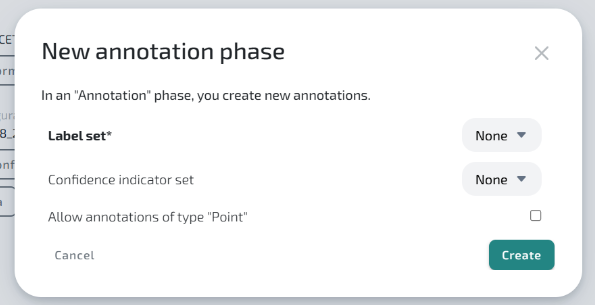
You will need to fill in the Label set. You can also define a Confidence set and specify whether the "Point" annotation is authorised.
Create a label set
Access APLOSEs administration part with the "Admin" link
Look for “Label sets” in the “API” block and click on “Add”

You can fill in the form with the name of your set, the owner (you), and select the labels you need for your annotation campaigns. If you do not find the desired labels, you can click on the “+” button close to the labels list to create a new label.
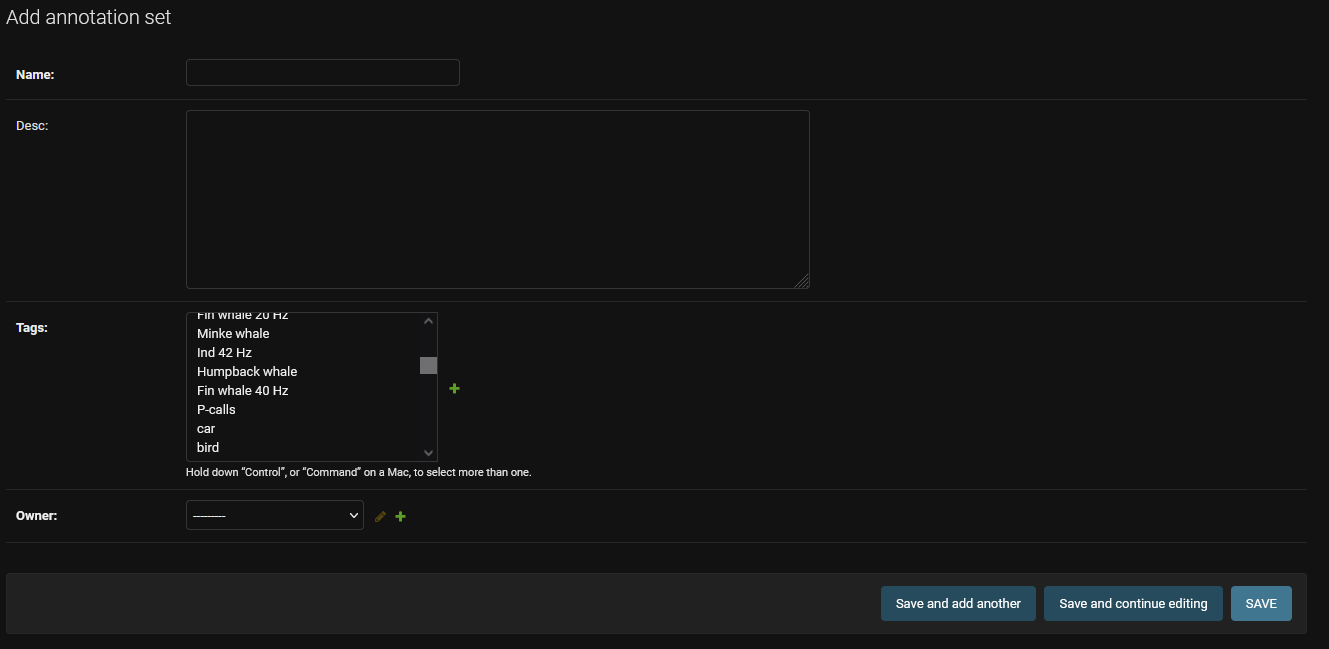
When your form is filled you can save it.
Create a confidence set
Access APLOSEs administration part with the "Admin" link
Look for “Confidence indicator sets” in the “API” block and click on “Add”

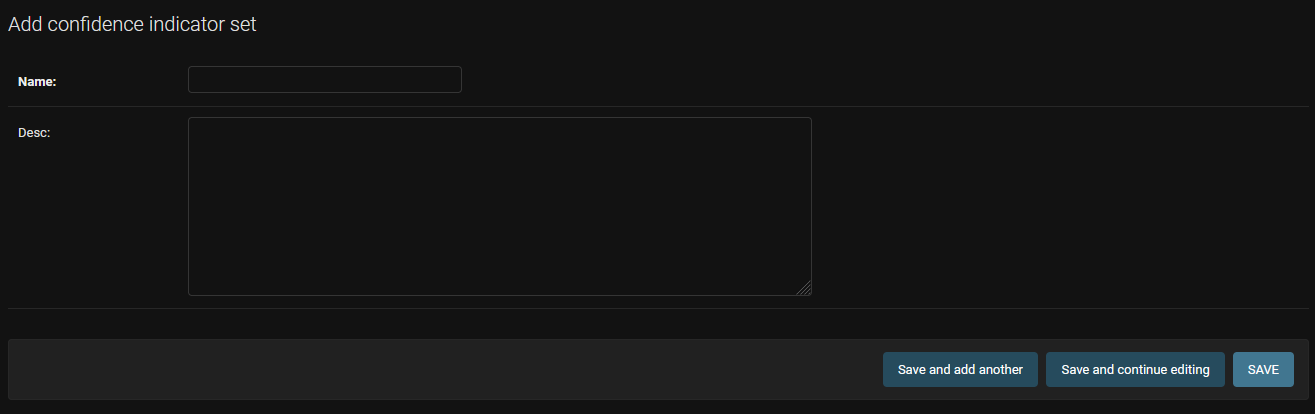
You can fill in the form with the name of your set and save it.
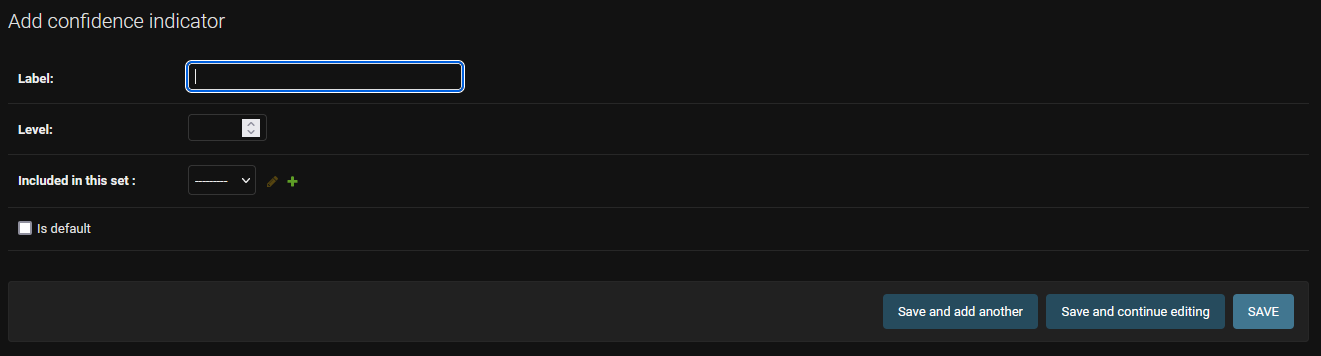
You can then look for the “Confidence indicators” in the “API” block and “Add” as many indicators as you need.

For each indicator you must fill the label, the level and the associated set that you have just created. You can define an indicator as the default one for your set by checking the “is default” checkbox.